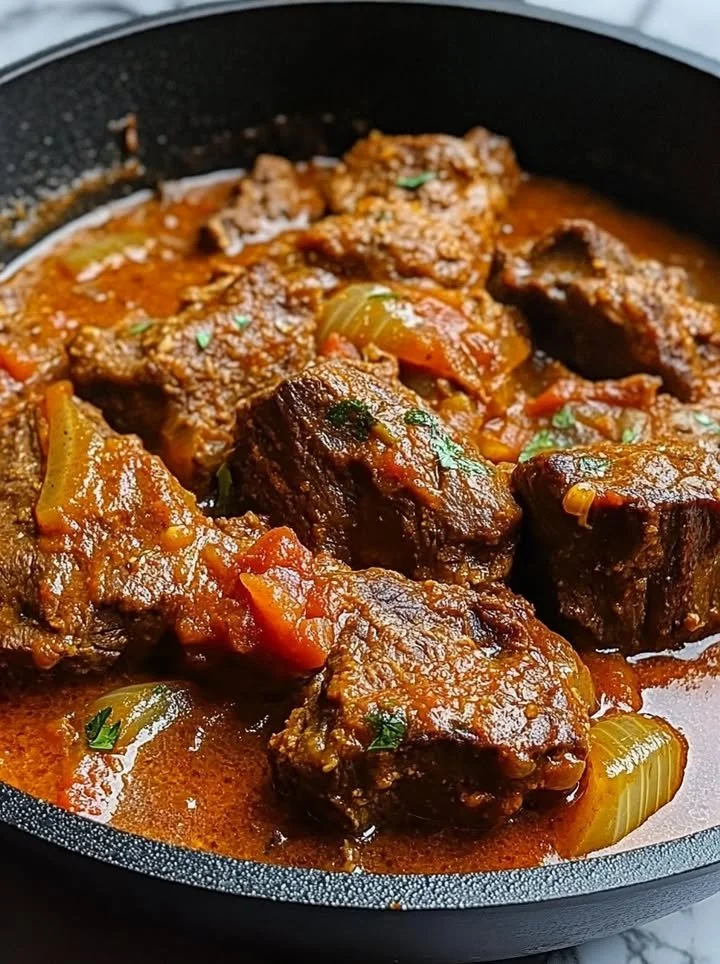
Nigerian Beef Stew
Nigerian Beef Stew is a rich and flavorful dish that captures the essence of the country’s diverse culinary heritage. This hearty stew is bursting with vibrant flavors from fresh tomatoes, peppers, and a blend of spices that create a comforting meal everyone will love. The aroma of the simmering beef, combined with the warmth of spices, makes it hard to resist. This recipe offers a simple and satisfying way to bring a taste of Nigeria into your kitchen. In this step-by-step guide, we’ll walk you through creating this delicious meal that’s perfect for any occasion.
Why You’ll Love This Recipe
If you’re in search of a recipe that is easy to prepare yet packed with tantalizing flavors, look no further! Nigerian Beef Stew is not only a beloved comfort food but also a family-friendly dish that pleases even the pickiest eaters. With minimal prep time and just a handful of ingredients, you can make a stew that is both nourishing and full of zest. Whether it’s for a weeknight dinner or a special gathering, this stew is quick to whip up and sure to impress.
Ingredients for Nigerian Beef Stew
- 1 lb beef: Tender and juicy cuts for a hearty base.
- 1.5 cups water: Essential for boiling the beef to perfection.
- 1 teaspoon black pepper: A warm spice that adds depth to the flavor.
- 1/2 teaspoon salt: Enhances the overall flavors.
- 3 plum tomatoes: Ripe and sweet, for a luscious tomato sauce.
- 1 red bell pepper: Adds both sweetness and vibrant color.
- 1 habanero pepper: A touch of heat, adjustable to your taste.
- 1 onion (divided): Half for blending and half for sautéing, adding a sweet and savory aroma.
- 1/2 cup olive oil: For sautéing and enhancing flavors.
- 1/2 cup beef stock or broth: To enrich the stew and create the perfect consistency.
- 1 tablespoon bouillon powder: Intensifies the beef flavor.
- 1/2 teaspoon thyme: For a herby note that balances the dish.
- 1/2 teaspoon curry powder: A fragrant spice that adds warmth.
- Black pepper, salt to taste: For seasoning adjustments.
Step-by-Step Directions to Prepare Nigerian Beef Stew
Boil the Beef
Start by washing the beef and placing it in a pot along with water, salt, and black pepper. This initial boil is crucial as it tenderizes the meat and infuses it with flavor. Bring the mixture to a boil and then lower the heat, allowing it to simmer for approximately 20–25 minutes until the beef is tender. This step lays the foundation for a savory and robust stew.
Prepare the Stew Base
While your beef is cooking, it’s time to prepare the stew’s flavorful base. In a blender, combine the plum tomatoes, red bell pepper, habanero pepper, and half of the onion. Blend until smooth, creating a vibrant puree that is essential for your Nigerian Beef Stew. Chop the remaining half of the onion and set it aside for sautéing.
Cook the Base Mixture
In a large pan, heat the olive oil over medium heat. Once hot, add the chopped onions and sauté until they become translucent and fragrant. This process generally takes about 5 minutes. After this, stir in the blended tomato and pepper mixture along with the remaining black pepper. Allow it to boil for 5 minutes while stirring occasionally to let the flavors meld together and reduce slightly.
Combine the Beef and Base
Now that the base is aromatic and bubbling with flavor, add the tender cooked beef along with 1/2 cup of beef stock or broth to the pan. Stir everything together, making sure the beef is well coated in the sauce. You can adjust the consistency of your stew by adding more broth if it’s too thick. Next, sprinkle in the thyme, bouillon powder, and curry powder. Combine well and taste the stew, adding more salt if needed.
Simmer the Stew
Cover the pot and let the stew simmer on low heat for about 10 minutes. This allows all the flavors to meld beautifully, resulting in a rich and satisfying dish. The aroma wafting through your kitchen will be enticing, making it hard to resist the urge to dig in right away.
Serve
Serve the Nigerian Beef Stew hot, accompanied by fluffy rice, sweet fried plantains, or your favorite bread. The combination of the savory stew with these side dishes creates a wonderful harmony of flavors and textures that everyone will enjoy.
Tips & Tricks
To elevate your Nigerian Beef Stew, consider the following tips and tricks:
- Use Fresh Ingredients: Fresh tomatoes and peppers will yield the best flavor.
- Adjust the Spice Level: If you prefer a milder stew, reduce the amount of habanero pepper or omit it entirely.
- Add More Vegetables: Feel free to add vegetables like carrots or potatoes for additional nutrition and flavor.
- Let it Rest: Allowing the stew to sit for a bit after cooking enhances the flavors even more as they have time to meld together.
Serving Suggestions & Pairings
Nigerian Beef Stew is a versatile dish that pairs well with various sides. Here are some creative serving ideas:
- With Rice: Serve over fluffy white rice to soak up the delicious sauce.
- With Pounded Yam: A traditional accompaniment in Nigerian cuisine that adds a delightful texture.
- With Fried Plantains: Sweet fried plantains provide a beautiful contrast to the savory stew.
- With Nigerian Moi Moi: A steamed bean pudding that complements the stew perfectly.
Nutritional Information
While nutritional values may vary, a typical serving of Nigerian Beef Stew contains approximately:
- Calories: 350-450 per serving, depending on portions.
- Proteins: High in protein due to the beef.
- Fats: Contains healthy fats from olive oil.
- Carbohydrates: Low in carbs if served alone, higher if served with rice or bread.
This dish not only satisfies your taste buds but also provides essential nutrients for a balanced meal.
Storing Tips & Variations for Nigerian Beef Stew
For those who enjoy meal prep, here are some tips for storing and varying your stew:
- Freezing: Nigerian Beef Stew can be frozen for up to 3 months. When ready to eat, simply thaw in the refrigerator overnight and reheat.
- Reheating: Reheat gently on the stovetop, adding a bit of broth if it’s too thick.
- Healthier Swaps: Opt for lean cuts of beef or substitute with turkey for a lighter option.
- Creative Variations: Experiment with different spices or add coconut milk for a creamy twist on the traditional flavors.
Conclusion for Nigerian Beef Stew
Ready to indulge in the rich, vibrant flavors of Nigerian Beef Stew? This dish is not only easy to make but turns any meal into a special occasion. With its hearty texture and mouthwatering aroma, it promises to be a client favorite at your dinner table. Gather your ingredients, follow the step-by-step directions, and treat yourself and your loved ones to a delicious homemade taste of Nigeria.
FAQs
1. How long does it take to prepare Nigerian Beef Stew?
It typically takes about 40 to 50 minutes, including prep and cooking time.
2. Can I use chicken instead of beef?
Absolutely! You can substitute chicken for beef, adjusting the cooking time accordingly.
3. What can I serve with Nigerian Beef Stew?
It pairs wonderfully with rice, plantains, bread, or pounded yam.
4. Can I make this stew in advance?
Yes, it stores well in the refrigerator for up to 3 days or can be frozen for longer storage.
5. How can I make it spicier?
You can add more habanero pepper or include chili powder to boost the heat levels.
Try out this delightful Nigerian Beef Stew recipe today and savor the explosion of flavors in every bite!

Nigerian Beef Stew
Ingredients
For the Stew
- 1 lb beef Tender and juicy cuts for a hearty base.
- 1.5 cups water Essential for boiling the beef to perfection.
- 1 teaspoon black pepper A warm spice that adds depth to the flavor.
- 1/2 teaspoon salt Enhances the overall flavors.
- 3 plum tomatoes plum tomatoes Ripe and sweet for a luscious tomato sauce.
- 1 red bell pepper red bell pepper Adds both sweetness and vibrant color.
- 1 habanero pepper habanero pepper A touch of heat, adjustable to taste.
- 1 onion onion (divided) Half for blending and half for sautéing.
- 1/2 cup olive oil For sautéing and enhancing flavors.
- 1/2 cup beef stock or broth To enrich the stew and create the perfect consistency.
- 1 tablespoon bouillon powder Intensifies the beef flavor.
- 1/2 teaspoon thyme For a herby note that balances the dish.
- 1/2 teaspoon curry powder A fragrant spice that adds warmth.
Instructions
Boil the Beef
- Wash the beef and place it in a pot along with water, salt, and black pepper. Bring to a boil and then lower the heat, allowing to simmer for approximately 20–25 minutes until the beef is tender.
Prepare the Stew Base
- In a blender, combine the plum tomatoes, red bell pepper, habanero pepper, and half of the onion. Blend until smooth to create a vibrant puree.
- Chop the remaining half of the onion and set aside for sautéing.
Cook the Base Mixture
- In a large pan, heat the olive oil over medium heat. Add the chopped onions and sauté until they become translucent, about 5 minutes.
- Stir in the blended tomato and pepper mixture along with the remaining black pepper. Allow it to boil for 5 minutes while stirring occasionally.
Combine the Beef and Base
- Add the tender cooked beef along with 1/2 cup of beef stock or broth to the pan. Stir everything together and adjust the consistency by adding more broth if too thick.
- Sprinkle in the thyme, bouillon powder, and curry powder, combine well and taste the stew, adding more salt if needed.
Simmer the Stew
- Cover the pot and let the stew simmer on low heat for about 10 minutes.
Serve
- Serve the Nigerian Beef Stew hot, accompanied by rice, fried plantains, or your favorite bread.